
VITON13 / Focused service
Ecommerce web design: catalogue, product pages and checkout
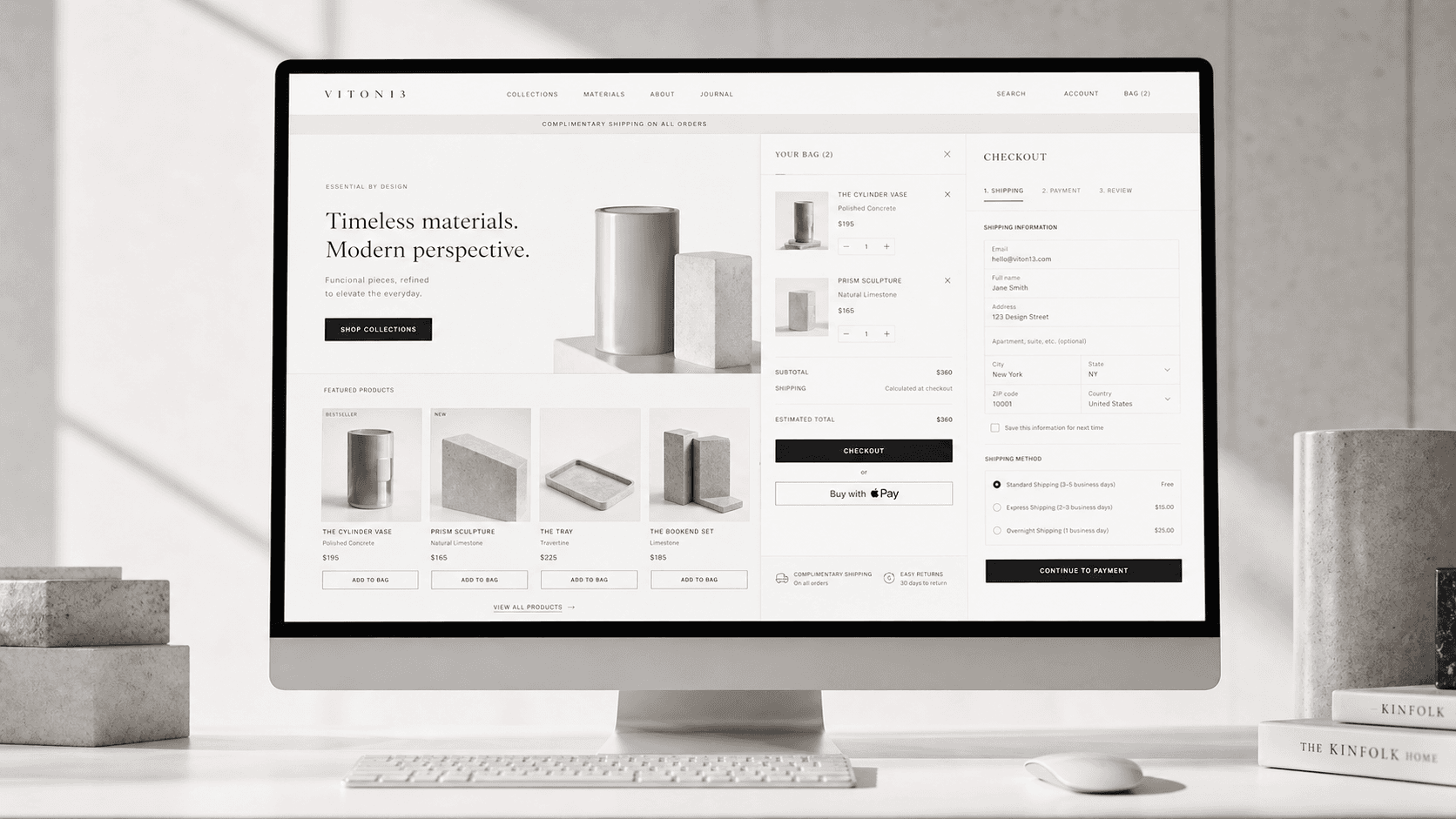
The design of your store's buying journeys in 6–10 working days, from $113 AI-assisted / $173 human-led: 1 catalogue journey with filters and search, 2 product page variants and a checkout of up to 3 steps, each screen drawn for phone and desktop, linked into 1 clickable prototype and handed over in Figma. The price includes 2 revision rounds on the deliverables. Building the store is a separate order.
Get an estimate in 1 working day↘Written estimate within 1 working dayIn short
What does Ecommerce experience design include?
Ecommerce experience design starts at USD 113 with AI-assisted production or USD 173 with a human-led route; typical delivery is 6–10 working days.
Includes 2 revision rounds on the deliverables; VITON13 confirms the scope in writing.
What you get and on what terms
Ecommerce experience design
AI-assistedfrom $113
Human-ledfrom $173
- Timeline
- 6–10 working days
- Revisions
- 2 rounds on the deliverables
- Included
- only the deliverables listed in the agreed package
- Not included
- external costs and work outside the agreed scope
- From you
- brief, current materials and any access needed for this scope
- You receive
- listed deliverables plus a written completion note
Prices in USD; other currencies are approximate. Scope, revisions and dates are written into your estimate.
Who it is for
A brand that already sells, on a marketplace or an older site, and watches buyers browse but drop off somewhere between the category, the product page and payment. It wants those journeys settled on screen before a developer builds them.
What is included
- 1 catalogue journey: the menu, a category page with filters and sorting, and search results with a no-results state
- 2 product page variants: a simple product and one with size or colour options
- A checkout of up to 3 steps from the cart to the order confirmation, with field errors and a declined-payment screen
- Every screen for 2 widths, phone and desktop, drawn phone first
- 1 clickable prototype that runs from a category to a placed order
- 1 Figma file for your developer, with components, states and spacing, plus the written completion note
Not included
- Building the store, its admin panel and payments (ecommerce development, a separate order)
- Product photography, product descriptions and other copy
- Product cards for Wildberries, Ozon and other marketplaces
- A new logo or brand identity
- Analytics set-up and A/B tests after launch
How the work runs
- 01
We go through your current store or marketplace shop as a buyer would and note where the path to payment stalls.
- 02
We sketch the catalogue, the product page and the checkout as one flow, and you approve it before any visual design.
- 03
We draw the screens for phone, then desktop, and link them into the prototype from a category to a placed order.
- 04
After the revision rounds you get the Figma file with its components and states, and the written completion note.
Example
CONCEPT Concept — not a commissioned project
ORIVA, a fictional acoustic atelier: we designed its store as a concept, 18 pages in Russian. Buyers narrow the catalogue by category, price and colour, choose a colour on the product page, open the cart as a side drawer and pay through a three-step checkout that checks each field. Labelled CONCEPT.
What this does not prove: The brand and its products are invented and the site has no visitors or orders, so it shows how the journeys are laid out, not how many buyers finish them.
Work
Cases
INTERNALOur own product
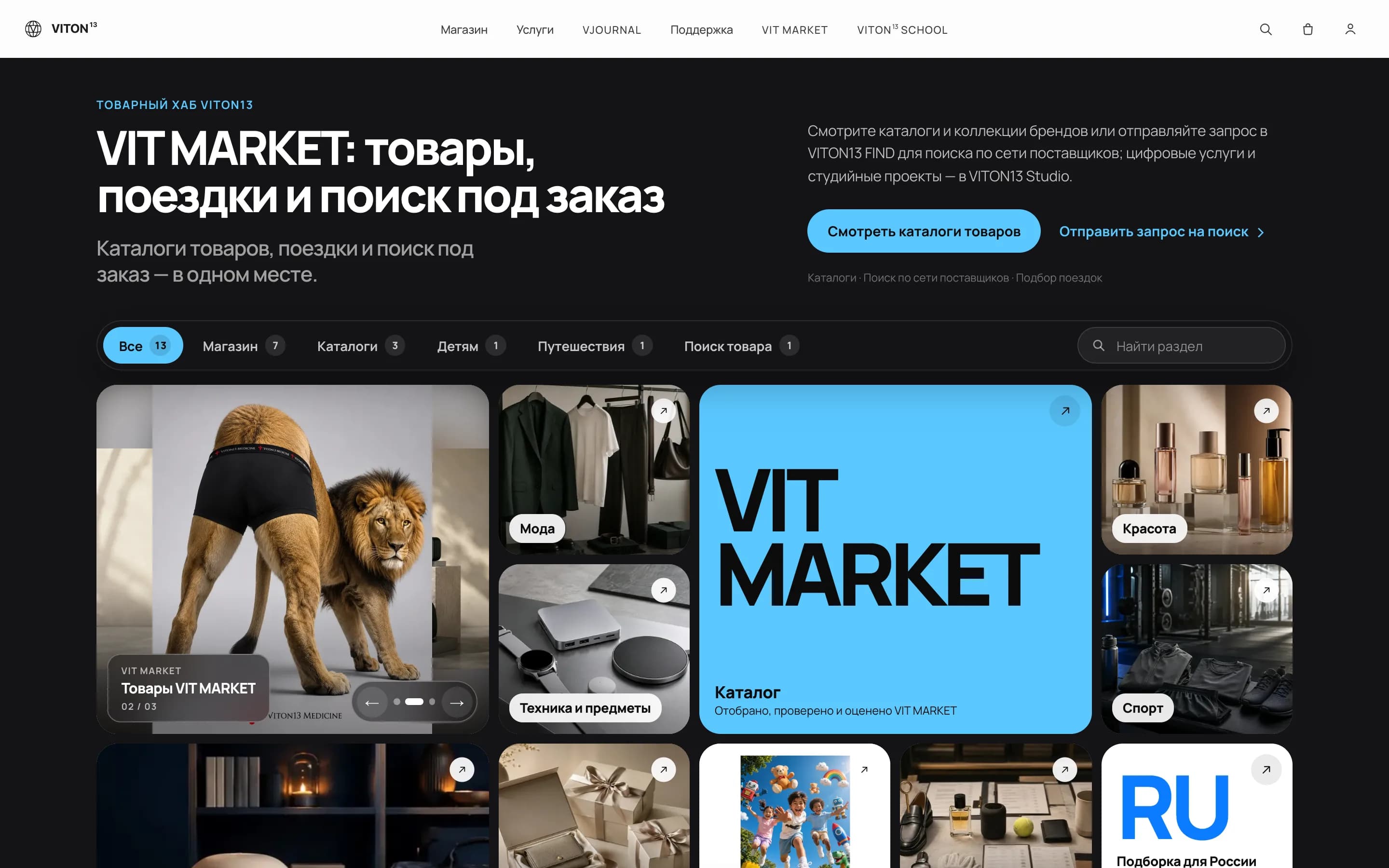
VIT MARKET
Marketplace · 13 departments · 4 languages · 2026
VIT MARKET is VITON13's own marketplace at market.viton13.com: 13 departments, the Russia edit catalogue, the ALL TOYS shop, the VITON13 FIND sourcing form and the TRAVELING desk. Supplier APIs sit behind one provider layer, and no page calls a supplier directly.
Read the case →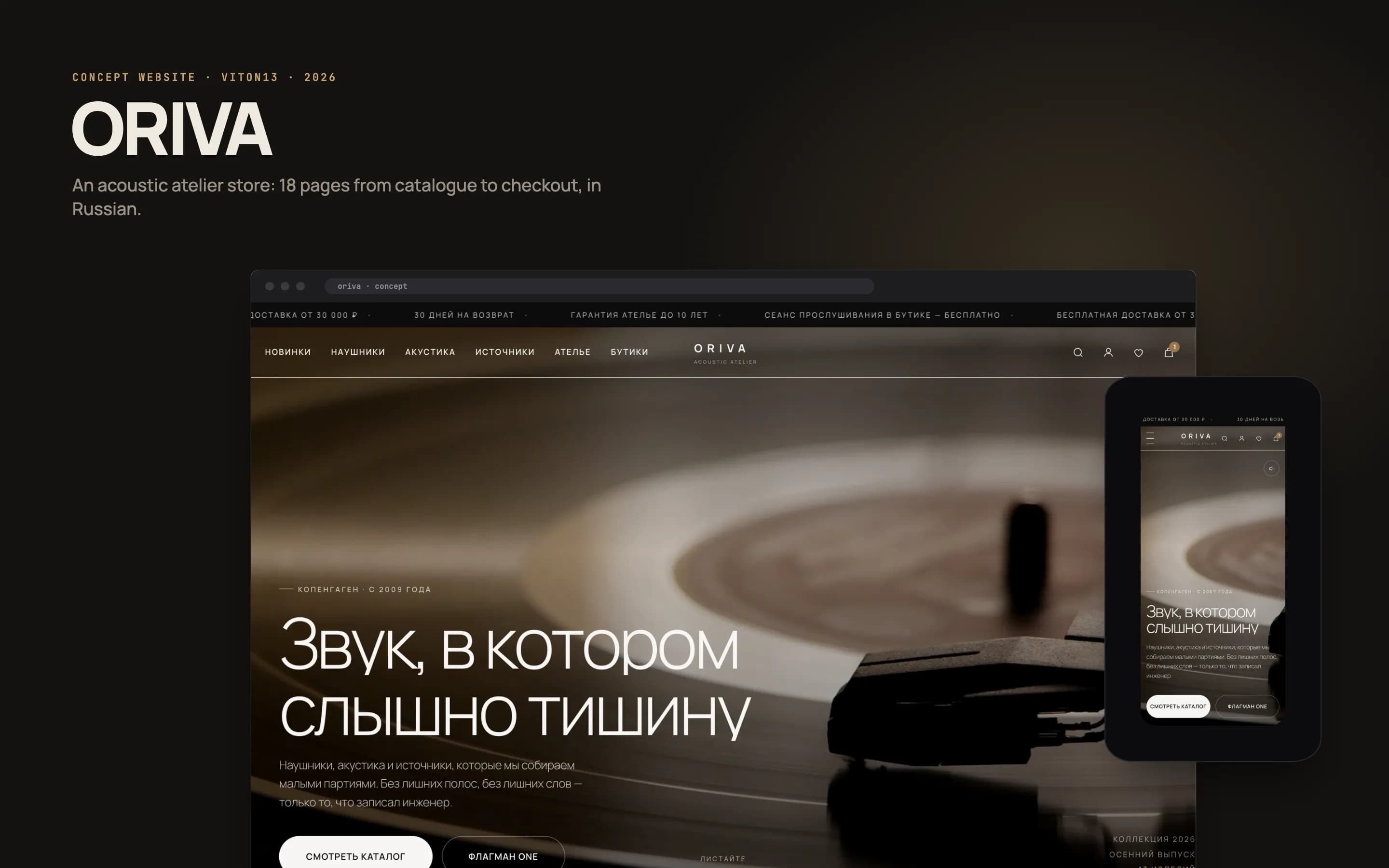
CONCEPTConcept — not a commissioned project
ORIVA
Concept store · 18 pages · Russian · 2026
ORIVA is a fictional acoustic atelier, and this is the online store VITON13 built for it as a concept to show range. Eighteen pages in Russian lead from the catalogue and product page through the cart to a three-step checkout, with boutiques on a map and a listening room with a turntable.
Read the case →Related guides
All guidesYOUR NEXT PROJECT · DESIGN FROM $33
From an idea to a clear plan.
Explore the scope and starting cost, then talk directly with VITON13. Your selected service stays with the conversation. Written estimate within 1 working day.
Let’s make it yours.
Explore our work or bring your own idea. It starts with a conversation.
Concept↗
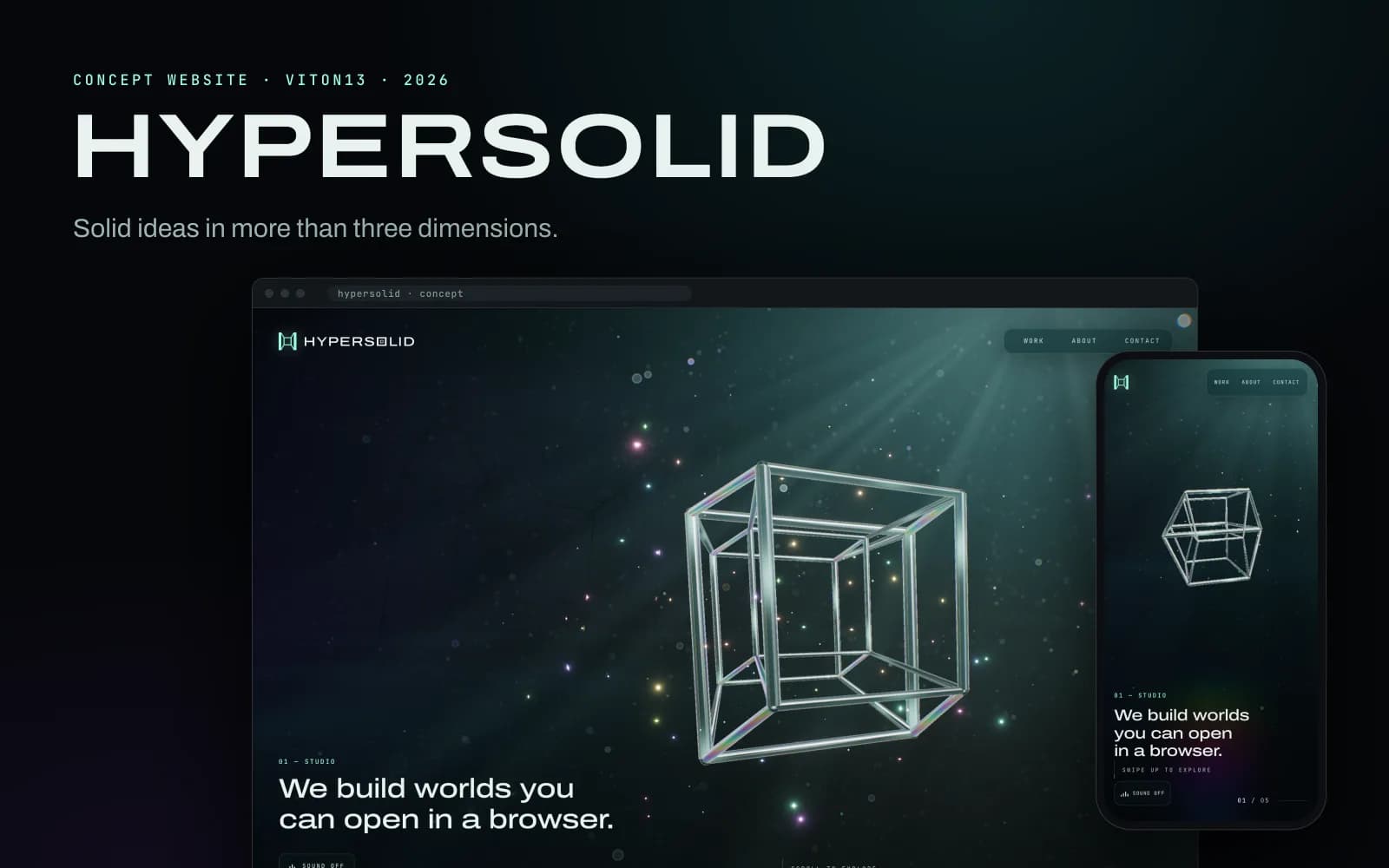
Concept site · WebGL · English · 2026HYPERSOLID
Scope and pricingYou can choose later+
01 / Scope & estimate
Ecommerce experience design
Starting budgetFrom $113
Reduce hesitation from category discovery to product choice and checkout.
Inside this scope
- 1 catalogue journey: the menu, a category page with filters and sorting, and search results with a no-results state
- 2 product page variants: a simple product and one with size or colour options
- A checkout of up to 3 steps from the cart to the order confirmation, with field errors and a declined-payment screen
- Every screen for 2 widths, phone and desktop, drawn phone first
- 1 clickable prototype that runs from a category to a placed order
- 1 Figma file for your developer, with components, states and spacing, plus the written completion note
- Timeline: 6–10 working days
- Revisions: 2 rounds on the deliverables
- Included: only the deliverables listed in the agreed package
- Excluded: external costs and work outside the agreed scope
- Input required: brief, current materials and any access needed for this scope
- Handoff: listed deliverables plus a written completion note
A starting estimate for the selected scope. We confirm deliverables, timing and the final price in writing before work starts. External costs are separate.
What you can count on
- Written estimate within 1 working day, sent to the contact you choose.
- Scope in writing before work starts: deliverables, revision rounds and what is not included.
- We work in four languages and show prices in your currency.
- No account needed. Attachments are encrypted in this browser before upload.
Send a detailed brief or attachments
Design from $33
AI reduces repetitive production time. VITON13 passes that efficiency back to the client while human review remains part of every delivery.
Order with VITON ID
Read the full guide before ordering
How to Build an Ecommerce UX Business Case: Friction Evidence and Priority
An ecommerce UX business-case guide for tracing shopping friction, separating interface issues from operational constraints and prioritising changes against a measurable baseline.
Open the article↗Questions people ask before buying
01Do you build the store as well?+
Not in this package. Ecommerce development builds it from these screens as a separate order with its own estimate, or your developer works from the Figma file.
02Which platform should the screens suit?+
Tell us before we start. A hosted checkout, such as Shopify's, lets you change only some of its parts, so we design within those limits; on a custom build every screen is open.
03Can we change only the checkout?+
This package covers the catalogue, the product page and the checkout together, because buyers who leave at payment often lost confidence earlier. If you are not sure where they drop off, a UX audit finds it first.
04Do you need our real products?+
Yes, a few typical ones with their real names, prices, options and photos. Filters and product pages drawn on invented items break when a long name or a fifth size arrives.
05How will we know the new journeys work?+
Before work starts we pick one signal to watch after the build, such as how many carts reach the order confirmation. We do not promise a number; the prototype lets you test the flow with a few buyers before any code.
06Where does AI come into the work?+
In the AI-assisted option, AI drafts layout variants and the empty and error states, and a designer chooses, corrects and signs off every screen. In the human-led option the designer draws the screens and AI only helps.
07Are marketplace product cards part of this?+
No. Cards for Wildberries or Ozon follow each marketplace's own rules and have their own page, product card design.
What clients say
More in this category
Corporate website design
Make a complex company easy to understand for customers, candidates and partners.
↗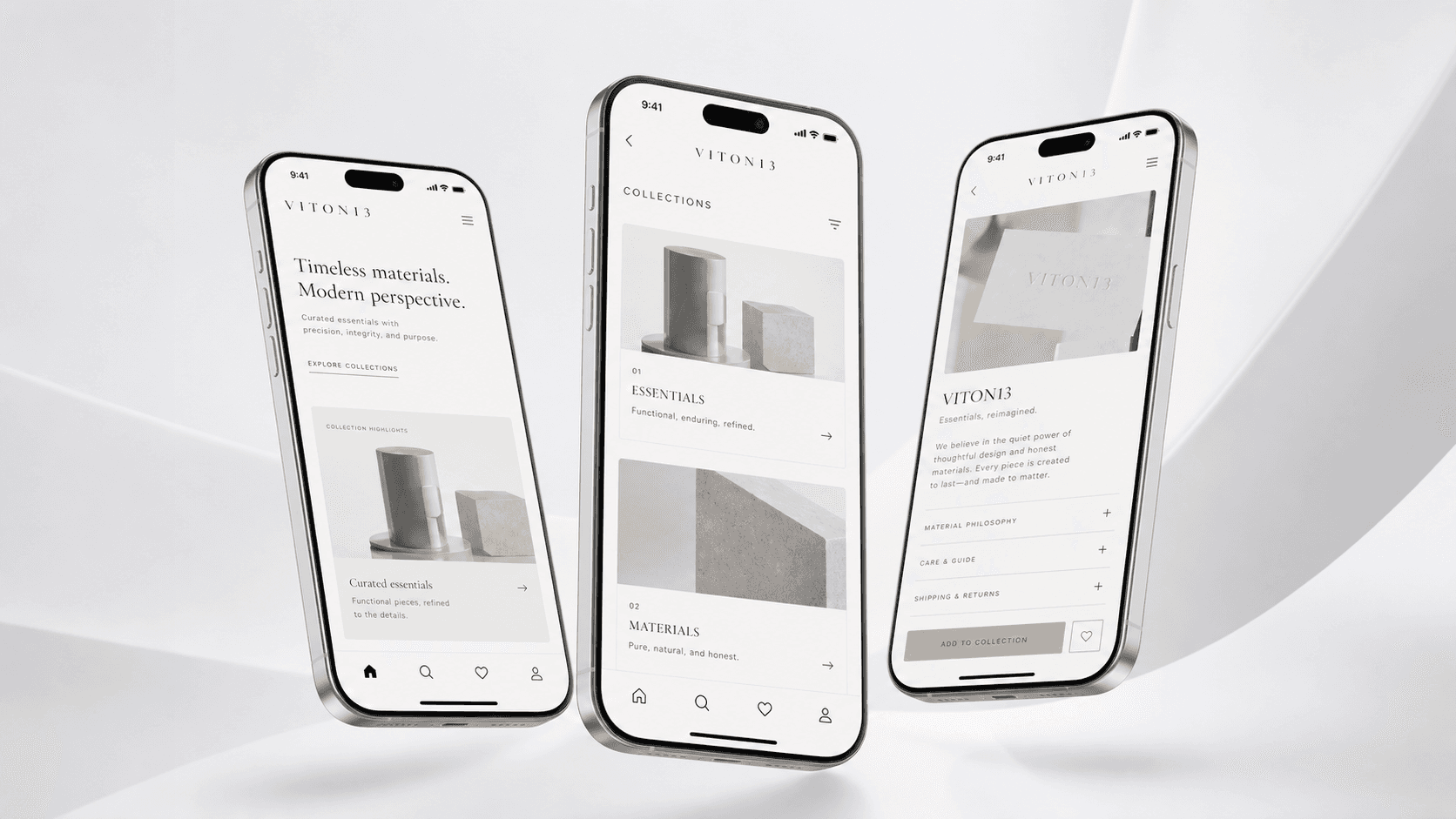
Mobile app UX/UI
Move a mobile product from feature list to testable flows and a reusable interface system.
↗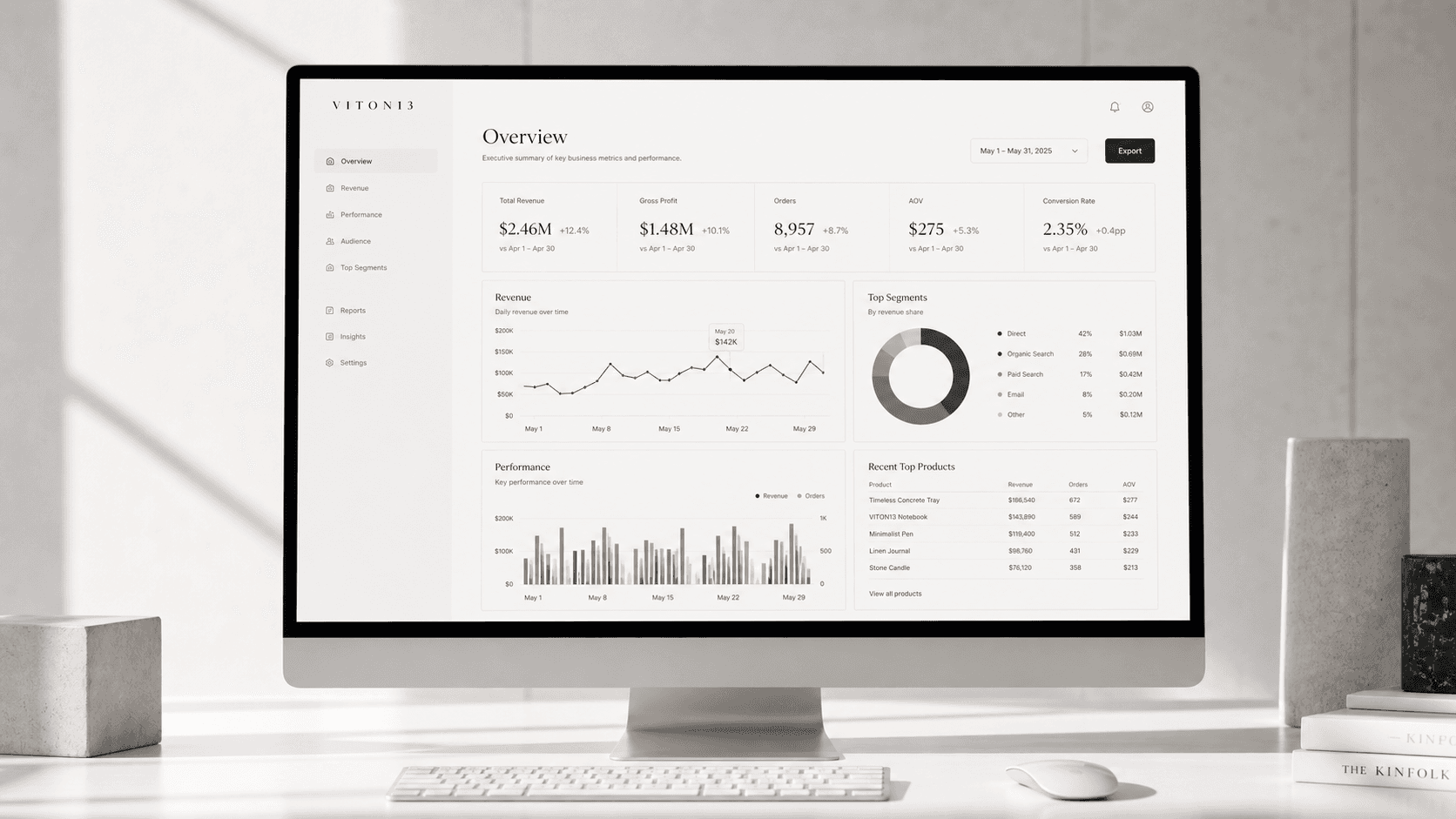
Dashboard interface design
Make dense operational data scannable, comparable and ready for decisions.
↗
Rebranding strategy
Change the brand without losing the recognition and trust you have already earned.
↗