

VITON13 / Focused service
Internal operations dashboard
Put the signals, approvals and exceptions a team acts on into one role-based control surface.
Get an estimate in 1 working day↘Written estimate within 1 working dayIn short
What does Internal operations dashboard include?
Internal operations dashboard starts at USD 73 with AI-assisted production or USD 93 with a human-led route; typical delivery is 5–8 working days.
The published scope includes operational data model, role-based dashboards, alerts and approvals.
Includes 2 revision rounds on the deliverables; VITON13 confirms the scope in writing.
What you get and on what terms
Internal operations dashboard
AI-assistedfrom $73
Human-ledfrom $93
- Operational data model
- Role-based dashboards
- Alerts and approvals
- Timeline
- 5–8 working days
- Revisions
- 2 rounds on the deliverables
- Included
- only the deliverables listed in the agreed package
- Not included
- external costs and work outside the agreed scope
- From you
- brief, current materials and any access needed for this scope
- You receive
- listed deliverables plus a written completion note
Prices in USD; other currencies are approximate. Scope, revisions and dates are written into your estimate.
Work
Cases
INTERNALOur own product
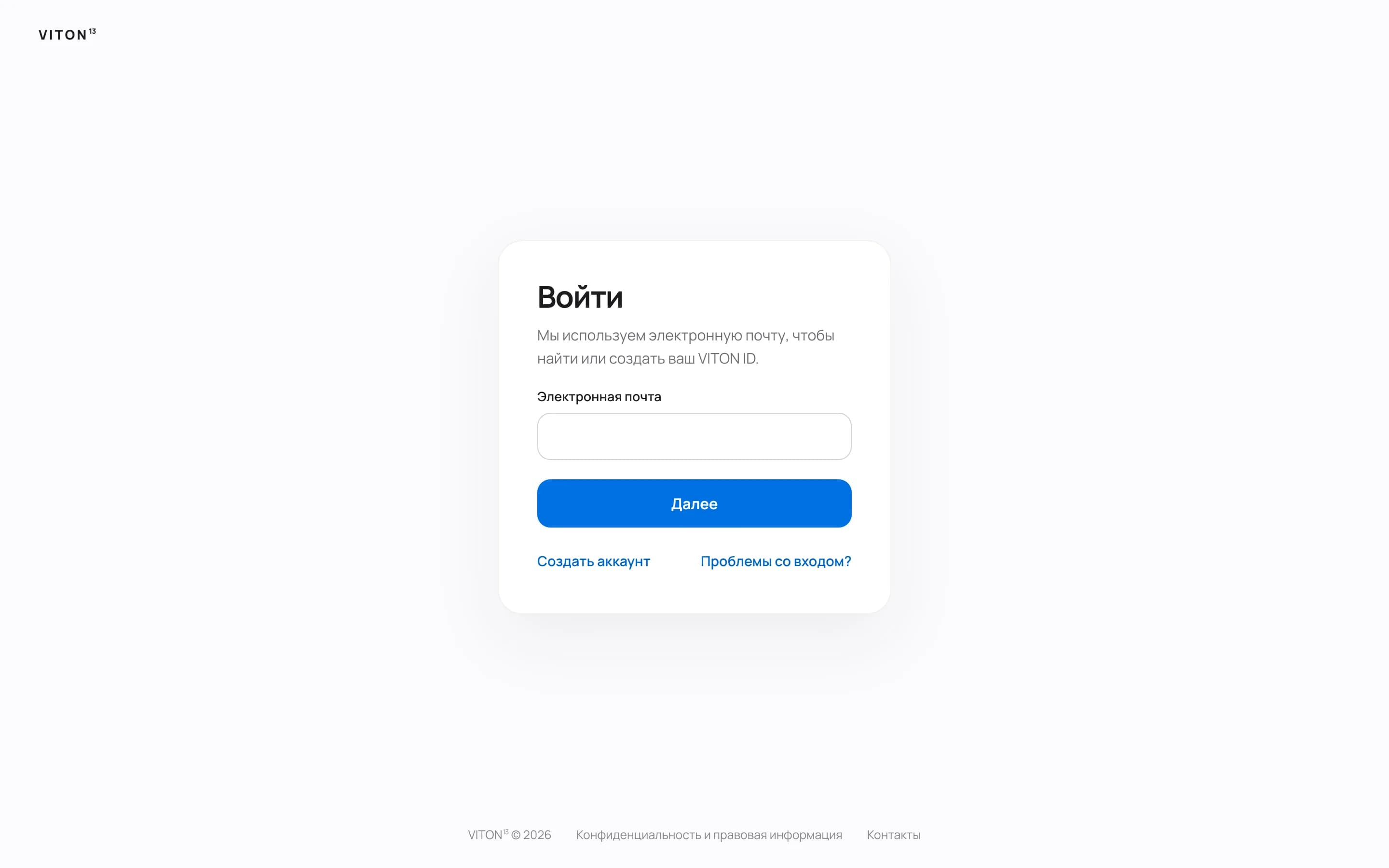
VITON ID and the personal cabinet
Account & cabinet · 2026
VITON ID is the account behind viton13.com: one sign-in for orders, service conversations with the studio and VITO bonuses, plus a console for admins. Files attached to a studio order are encrypted in the browser before upload.
Read the case →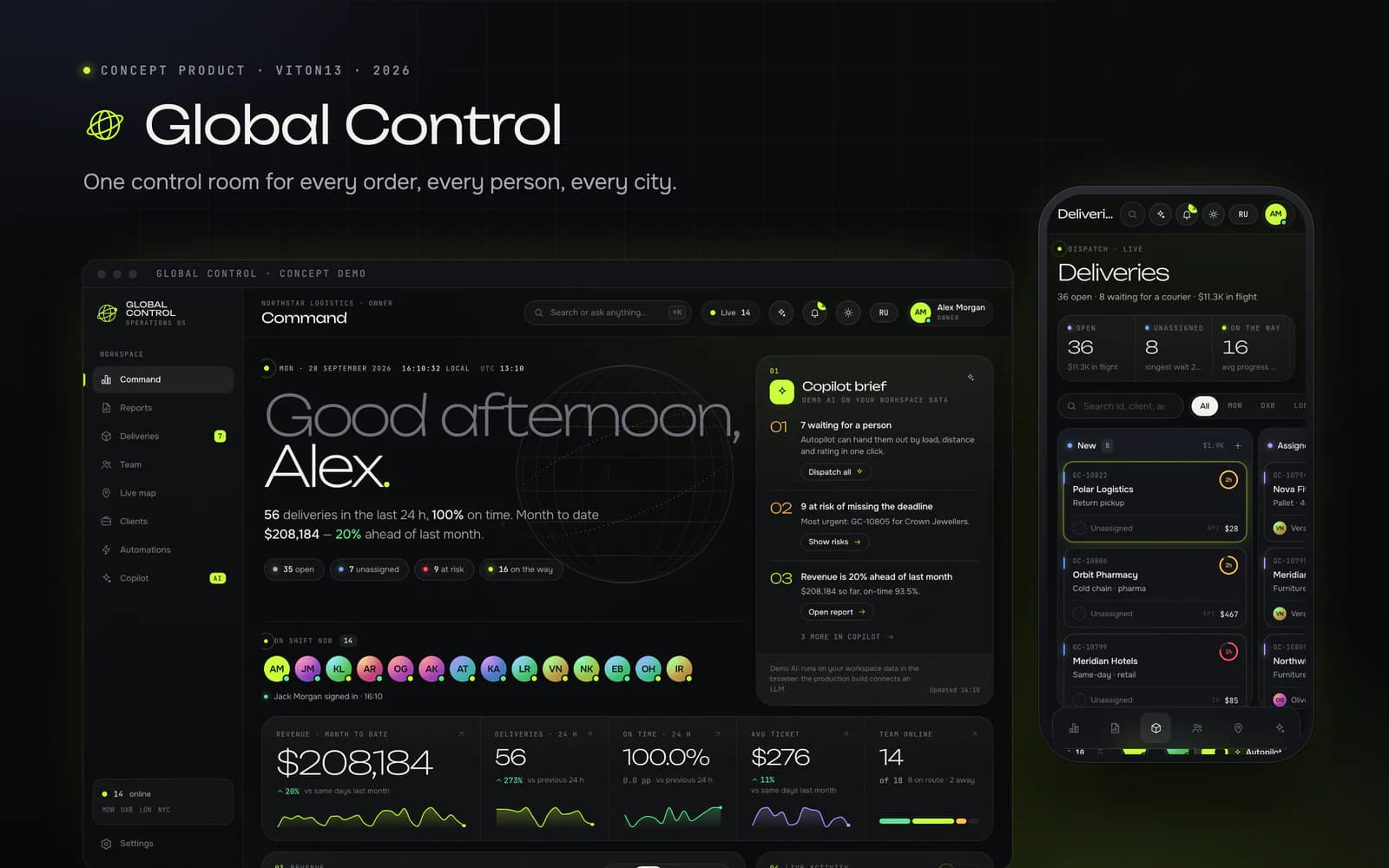
CONCEPTConcept — not a commissioned project
Global Control
Concept product · Web app · English, Russian · 2026
Global Control is an operations CRM VITON13 built as a concept, shown through Northstar Logistics, a fictional delivery company with hubs in Moscow, Dubai, London and New York. Every visitor builds their own sandbox in a short onboarding and gets a team, clients and two weeks of orders; a live simulation keeps the company moving while they dispatch orders, register people, read reports and talk to a demo AI copilot. Everything runs in the browser on generated data.
Read the case →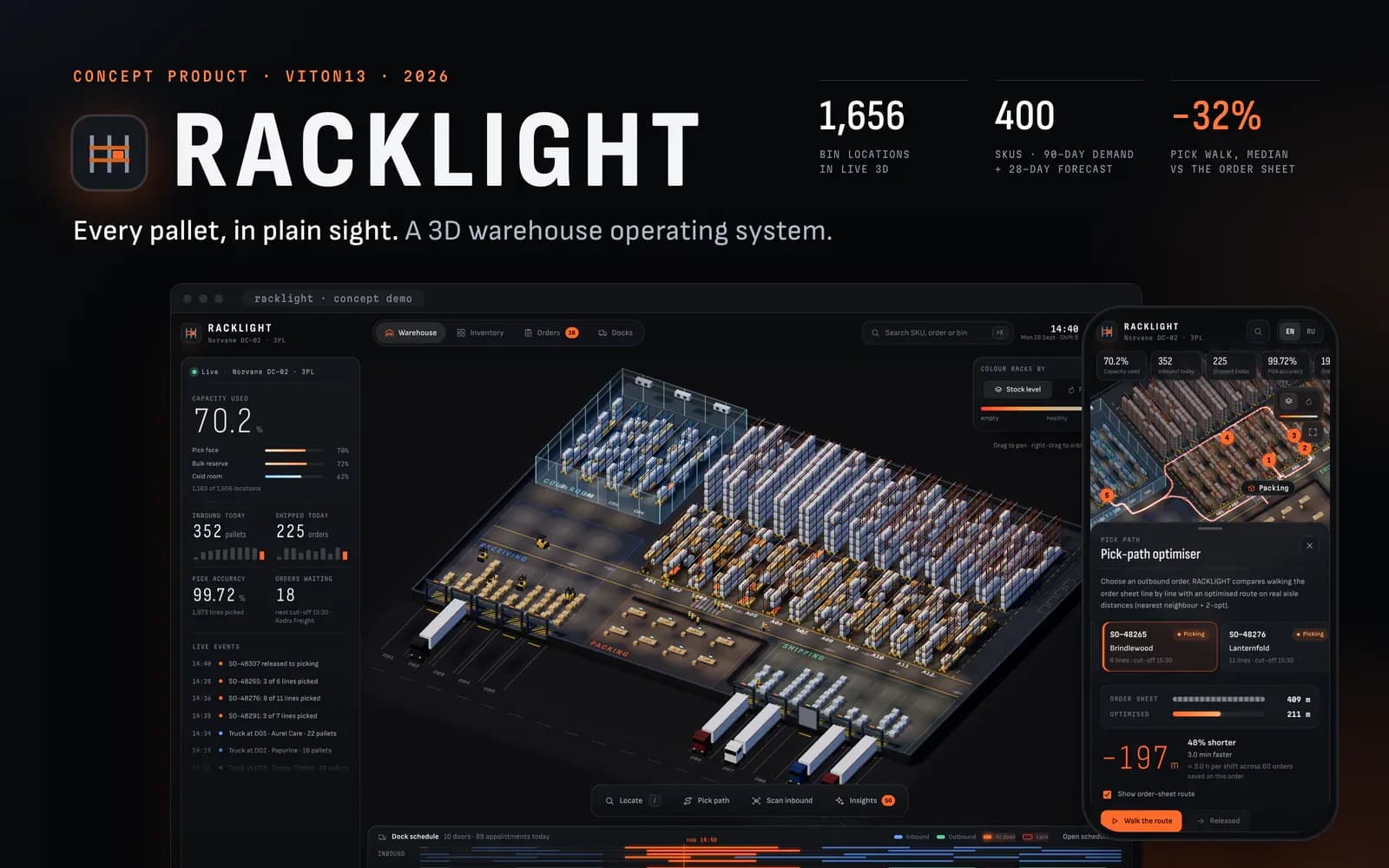
CONCEPTConcept — not a commissioned project
RACKLIGHT
Concept product · WMS · 3D · English and Russian · 2026
RACKLIGHT is a warehouse management system for Norvane DC-02, a third-party-logistics warehouse that does not exist. VITON13 built it as a concept to show what an operations product looks like when the warehouse itself is the interface: 1,656 bin locations as live 3D pallets, search that flies to any bin, a pick-path optimiser, inbound scanning with a putaway rule and demo AI for stock, which is rules and statistics in the browser and labelled as such.
Read the case →YOUR NEXT PROJECT · DEVELOPMENT FROM $13
From an idea to a clear plan.
Explore the scope and starting cost, then talk directly with VITON13. Your selected service stays with the conversation. Written estimate within 1 working day.
Let’s make it yours.
Explore our work or bring your own idea. It starts with a conversation.
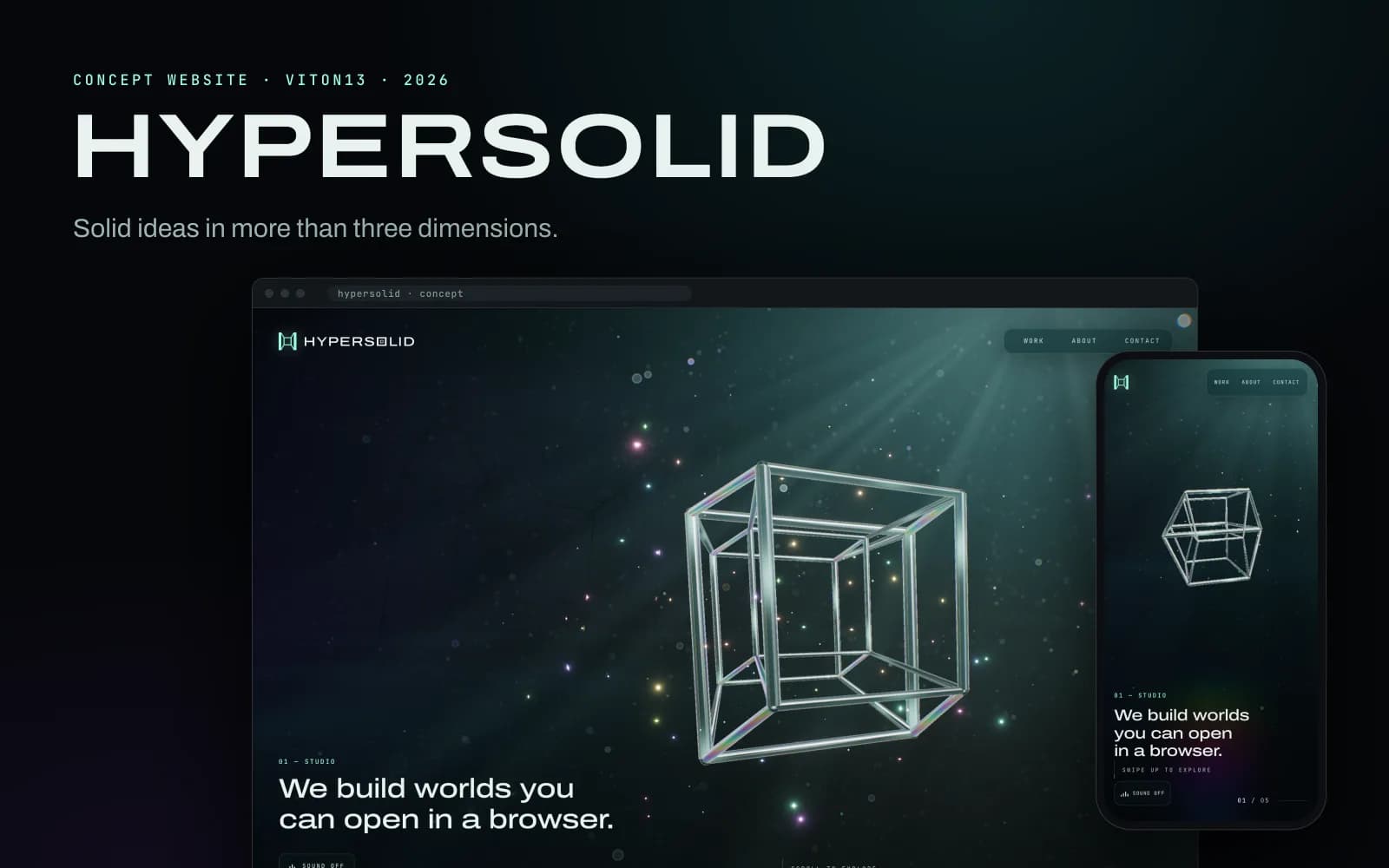
Concept↗
Concept site · WebGL · English · 2026HYPERSOLID



Scope and pricingYou can choose later+
01 / Scope & estimate
Internal operations dashboard
Starting budgetFrom $73
Put the signals, approvals and exceptions a team acts on into one role-based control surface.
Inside this scope
- Operational data model
- Role-based dashboards
- Alerts and approvals
- Timeline: 5–8 working days
- Revisions: 2 rounds on the deliverables
- Included: only the deliverables listed in the agreed package
- Excluded: external costs and work outside the agreed scope
- Input required: brief, current materials and any access needed for this scope
- Handoff: listed deliverables plus a written completion note
A starting estimate for the selected scope. We confirm deliverables, timing and the final price in writing before work starts. External costs are separate.
What you can count on
- Written estimate within 1 working day, sent to the contact you choose.
- Scope in writing before work starts: deliverables, revision rounds and what is not included.
- We work in four languages and show prices in your currency.
- No account needed. Attachments are encrypted in this browser before upload.
Send a detailed brief or attachments
Development from $13
AI reduces repetitive production time. VITON13 passes that efficiency back to the client while human review remains part of every delivery.
Order with VITON IDHow the work is set up
01
The business problem — Operational data model
Internal operations dashboard becomes relevant when a concrete workflow, decision or handoff can no longer be trusted. Put the signals, approvals and exceptions a team acts on into one role-based control surface. We begin with the blocked action and its operational cost, then choose only the technology needed to remove that constraint. For Internal operations dashboard, the opening workshop uses a real blocked case and its accountable owner rather than a fictional product brief.
02
How delivery is approved — Role-based dashboards
The page is not accepted because a demonstration looks polished. Acceptance means one end-to-end role journey completed with real states, permissions, recovery and an accountable operations owner. An authorised owner must be able to start from Operational data model, observe Role-based dashboards and reproduce Alerts and approvals without builder-only knowledge. Representative content, permissions, error states and recovery are exercised before the release is called complete. The evidence chain must connect Operational data model to Role-based dashboards; if that link cannot be demonstrated, Alerts and approvals is not ready for acceptance.
03
When a smaller route is better — Alerts and approvals
A full internal operations dashboard engagement is not always the responsible answer. The safer route may be configuring an existing product when the workflow is standard and ownership is not strategic. Before a full commission, test whether Alerts and approvals alone removes the buying risk, provided it reaches the same outcome with less permanent complexity. Operational data model is treated as an operating component, Role-based dashboards as the controlled handoff and Alerts and approvals as the record a future maintainer can inspect.
04
What the build covers — Operational data model
For Internal operations dashboard, the build boundary joins Operational data model, Role-based dashboards, Alerts and approvals. Adjacent features stay outside until they have their own owner, data source and acceptance condition, so a focused commission cannot quietly become a platform rewrite. A failure exercise begins at Role-based dashboards, follows the affected user or operator back to Operational data model, and verifies recovery through Alerts and approvals.
05
Life after release — Role-based dashboards
Internal operations dashboard continues after deployment through ownership, monitoring, maintenance and a usable handover. The final package records access, dependencies, known limits and the action to take when the normal route fails. The buy-versus-build comparison is written specifically around ownership of Operational data model, continuing operation of Role-based dashboards and portability of Alerts and approvals.
06
How the quote is formed — Alerts and approvals
Internal operations dashboard starts at $73 with a usual window of 5–8 working days. That published entry point remains valid for the stated outputs; integrations, migrations or risk controls outside them are estimated separately before approval. The final review does not ask whether internal operations dashboard looks complete; it asks whether Operational data model, Role-based dashboards and Alerts and approvals survive the agreed representative case.
Operational data model
Operational data model is the working artifact used with a representative input. Its owner and expected state are named before production, so approval cannot depend on a polished demo.
Role-based dashboards
Role-based dashboards carries the controlled transition. We exercise one normal path and one interruption against this risk: copying the current spreadsheet into software without deciding roles, exceptions, audit history and the one workflow worth simplifying. Here the warning sign is a handoff from Operational data model to Role-based dashboards that works only in the prepared demo and leaves Alerts and approvals without an accountable owner. Every metric traces back to a named source, refresh rule, exception owner and operational action.
Alerts and approvals
Alerts and approvals is the handover and proof layer. A second authorised maintainer must be able to reproduce the result and verify one end-to-end role journey completed with real states, permissions, recovery and an accountable operations owner. An authorised owner must be able to start from Operational data model, observe Role-based dashboards and reproduce Alerts and approvals without builder-only knowledge.

Read the full guide before ordering
Internal operations dashboard — proposal comparison
Compare Internal operations dashboard proposals by exclusions, control of Operational data model, recovery through Role-based dashboards and portability of Alerts and approvals. The guide makes unlike technical offers commercially comparable.
Open the article↗Questions people ask before buying
01What evidence should exist before the work starts?+
Bring one normal example, one failed example, the current stack, access constraints and the person who will accept the result. That is enough to expose unknowns without pretending the whole specification is finished. For Internal operations dashboard, the opening workshop uses a real blocked case and its accountable owner rather than a fictional product brief.
02What is the acceptance test?+
Acceptance is not a presentation. For this service it means one end-to-end role journey completed with real states, permissions, recovery and an accountable operations owner. An authorised owner must be able to start from Operational data model, observe Role-based dashboards and reproduce Alerts and approvals without builder-only knowledge, using representative data, permissions and at least one failure state. The evidence chain must connect Operational data model to Role-based dashboards; if that link cannot be demonstrated, Alerts and approvals is not ready for acceptance.
03Which risk changes the scope most?+
The decisive risk is copying the current spreadsheet into software without deciding roles, exceptions, audit history and the one workflow worth simplifying. Here the warning sign is a handoff from Operational data model to Role-based dashboards that works only in the prepared demo and leaves Alerts and approvals without an accountable owner. Every metric traces back to a named source, refresh rule, exception owner and operational action. If it cannot be tested safely, the proposal must include discovery, a pilot or a smaller boundary before production. Operational data model is treated as an operating component, Role-based dashboards as the controlled handoff and Alerts and approvals as the record a future maintainer can inspect.
04Could an existing tool do this instead of a custom build?+
Sometimes. We compare the requested ownership with configuring an existing product when the workflow is standard and ownership is not strategic. Before a full commission, test whether Alerts and approvals alone removes the buying risk. Custom work is justified only when the operating difference matters more than the continuing complexity. A failure exercise begins at Role-based dashboards, follows the affected user or operator back to Operational data model, and verifies recovery through Alerts and approvals.
05How are price and timing confirmed?+
The published entry point is $73 and 5–8 working days for the listed outputs. Dependencies outside that boundary are priced before approval. The buy-versus-build comparison is written specifically around ownership of Operational data model, continuing operation of Role-based dashboards and portability of Alerts and approvals.
What clients say
More in this category
Web app MVP
Prove the core user journey before expanding the feature list and engineering cost.
↗
Customer portal development
Give customers one clear place for requests, documents, status, payments and support.
↗
Real-time collaboration application
Build a shared workspace with live state, permissions, activity history and reliable conflict handling.
↗
Next.js website development
Build a scalable modern site with server rendering, structured routes and controlled deployment.
↗