Web development company: new sites, stores and fixes
New websites, fixes to existing ones, online stores and the integrations behind them. We build, test on real devices and hand the work over with a written completion note.
Fix a live sitefrom $13
New websitefrom $73
Product or integrationfrom $213Final estimate from the brief: user roles, integrations and platforms
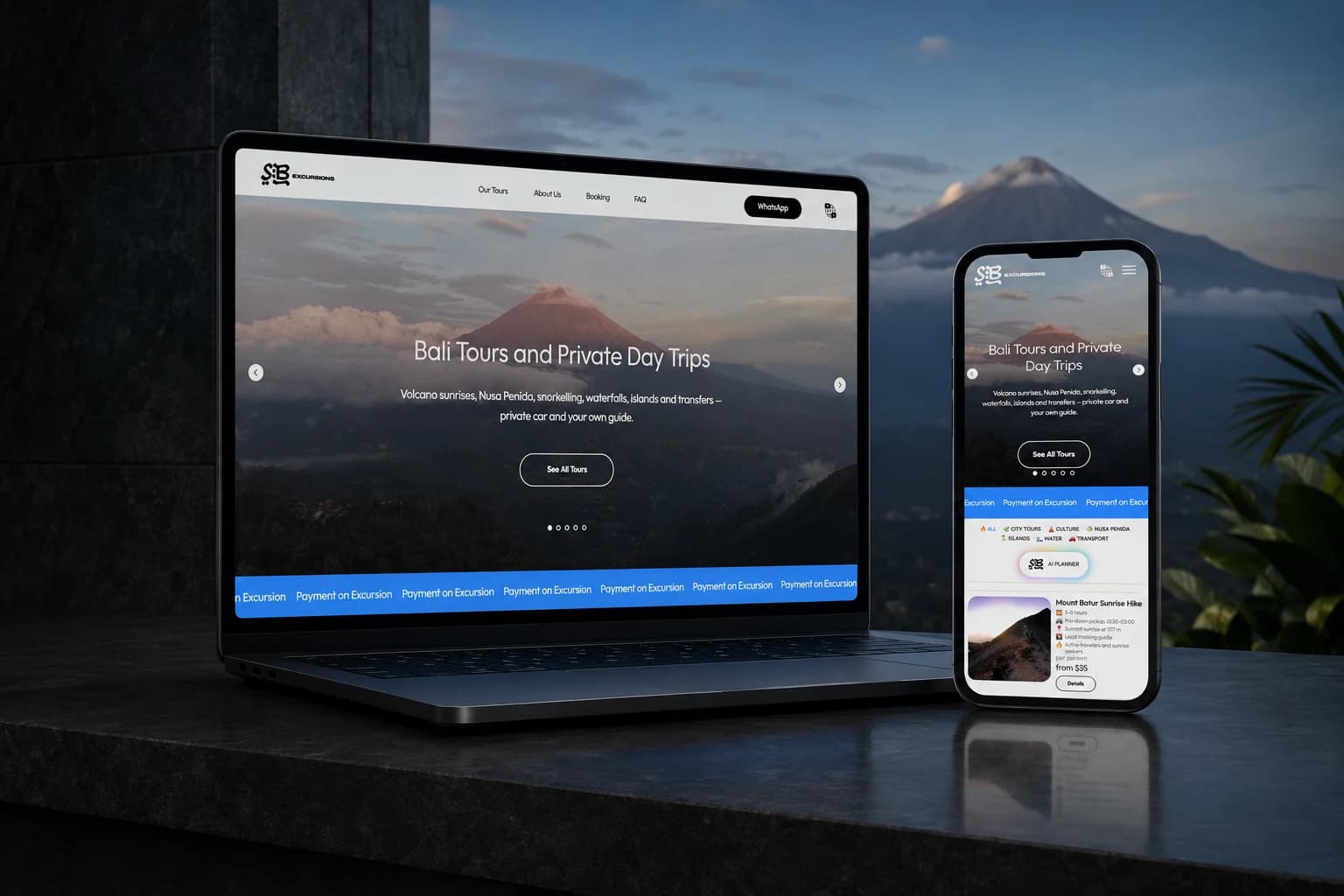
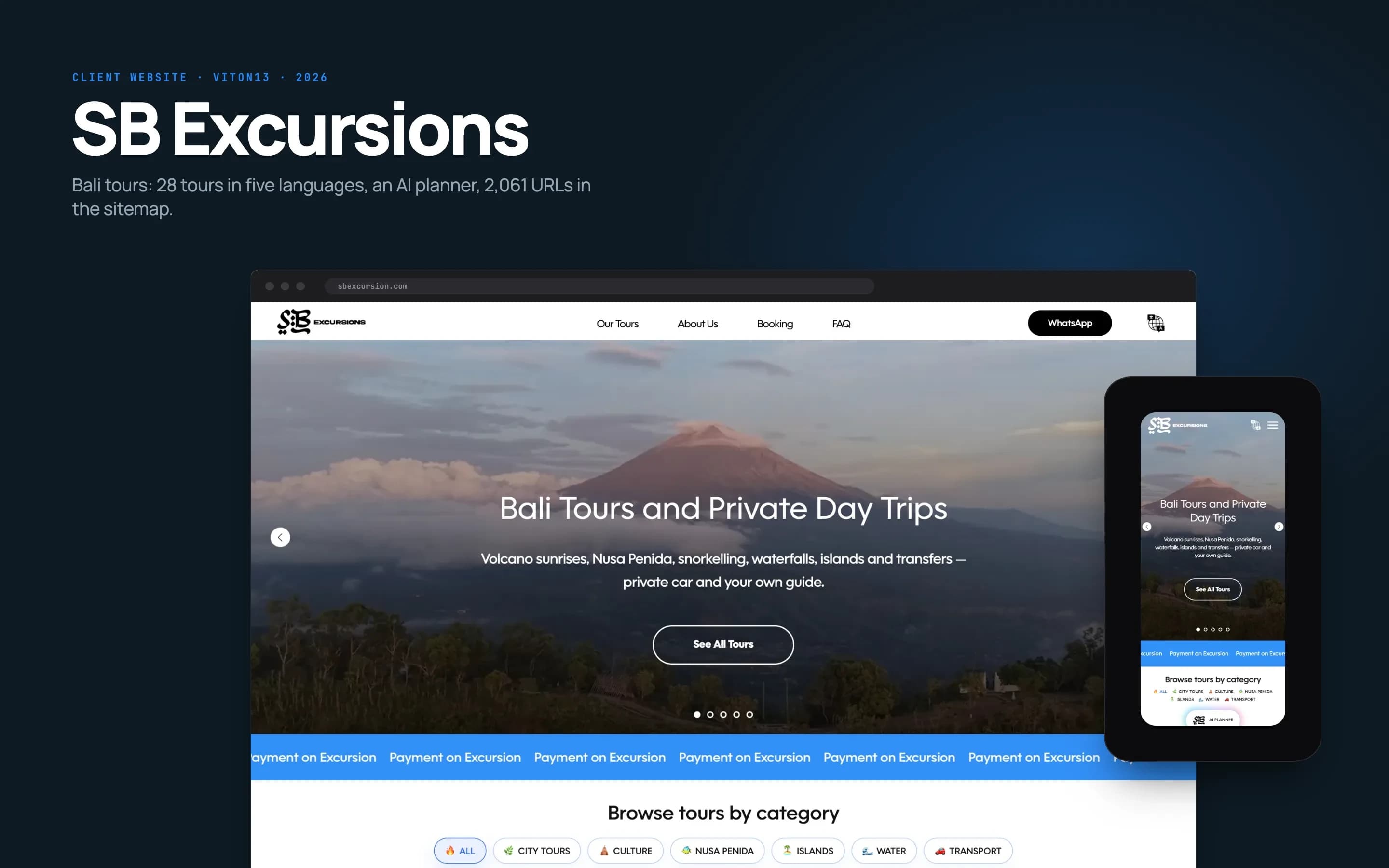
CLIENTSB Excursions — a client website we designed and built
Work
Work we can show, labelled honestly
Client work, concepts and our own products. Each says what we did and what it does not prove.
CLIENTClient project
SB Excursions
Bali · Travel website · 2026
A five-language travel website for an excursion company in Bali: a tour catalogue, tour pages with prices, an AI trip planner, a journal of guides and a direct WhatsApp enquiry. Google Search Console, three months to 17 September 2026: 1.08K clicks and 92.2K impressions.
What we did
VITON13 handled the website structure, interface design and implementation: tour catalogue, filters, itinerary pages and responsive layouts.
What this does not prove
CLIENT project. Screens document interface work, not booking or revenue results. Conversion data and the project budget are not published; the site does not claim an internal checkout.
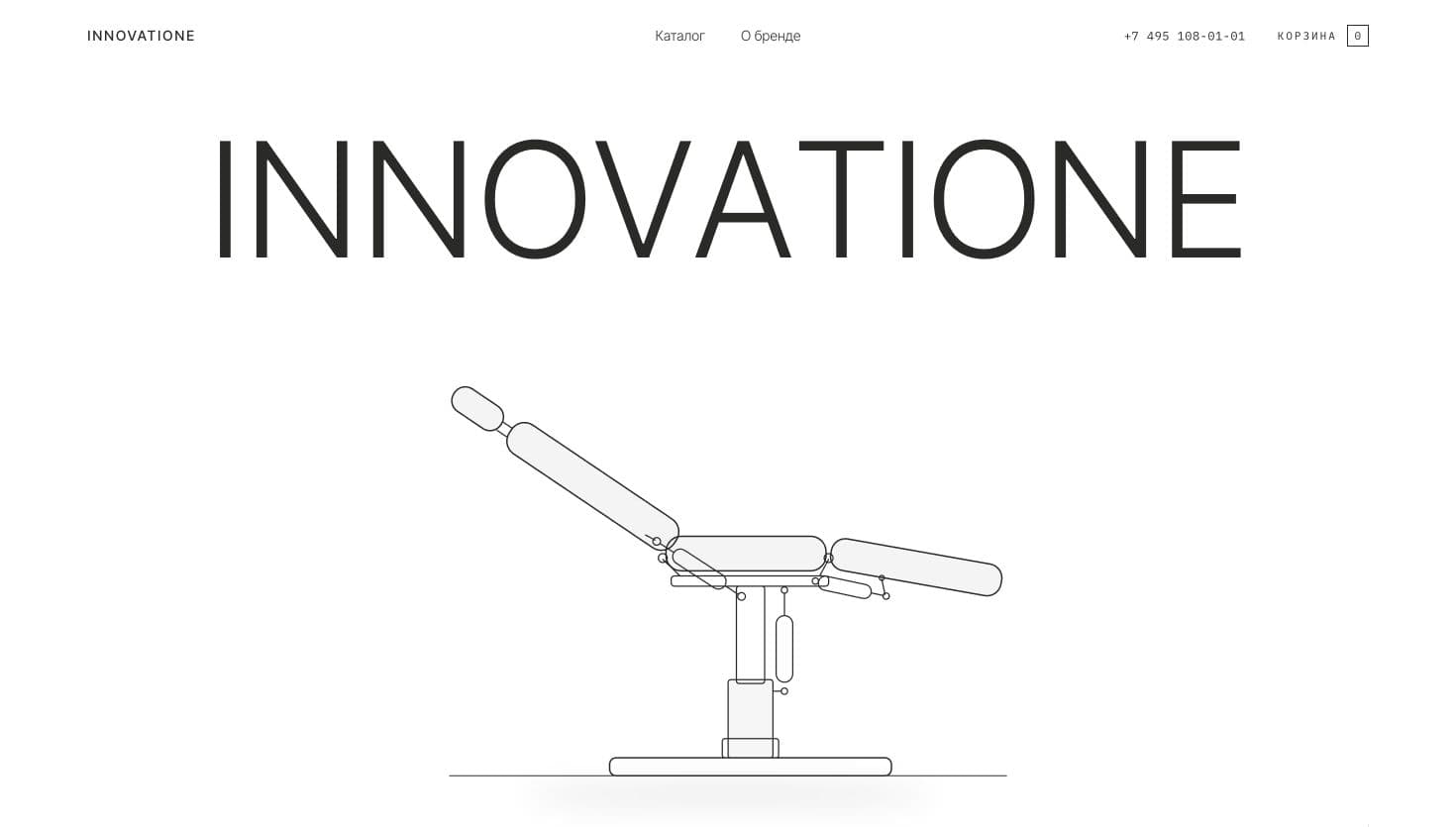
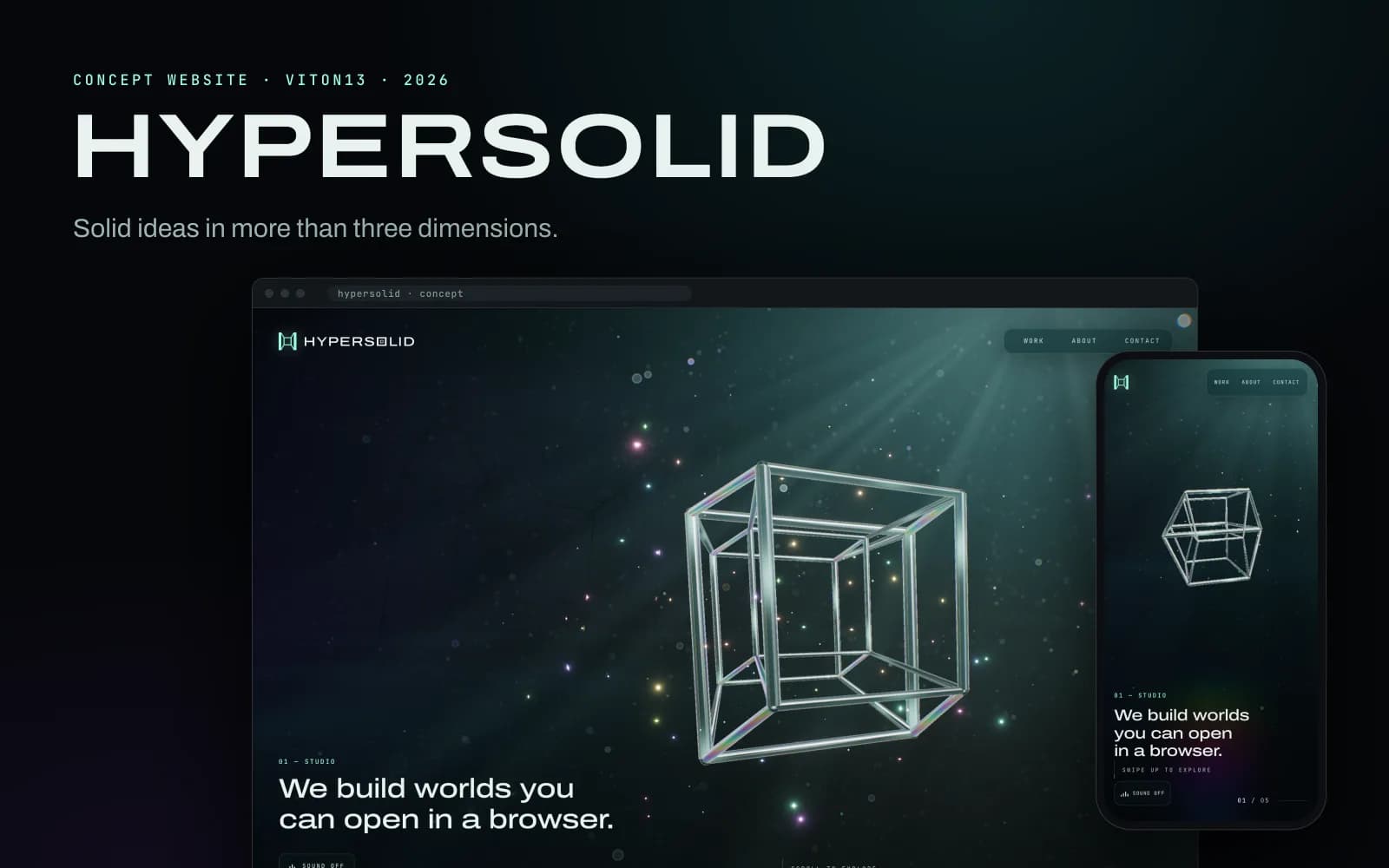
The concept connects a distinctive homepage to a catalogue of ten demo items in five groups, with technical drawings, category filters and add-to-cart actions.
What we did
Concept direction, site structure, UX/UI, homepage and catalogue, product scenarios and a web prototype.
What this does not prove
CONCEPT, not CLIENT. Product names, prices and contacts are demo data. The screens do not verify real inventory, payment processing, fulfilment, revenue or conversion results.
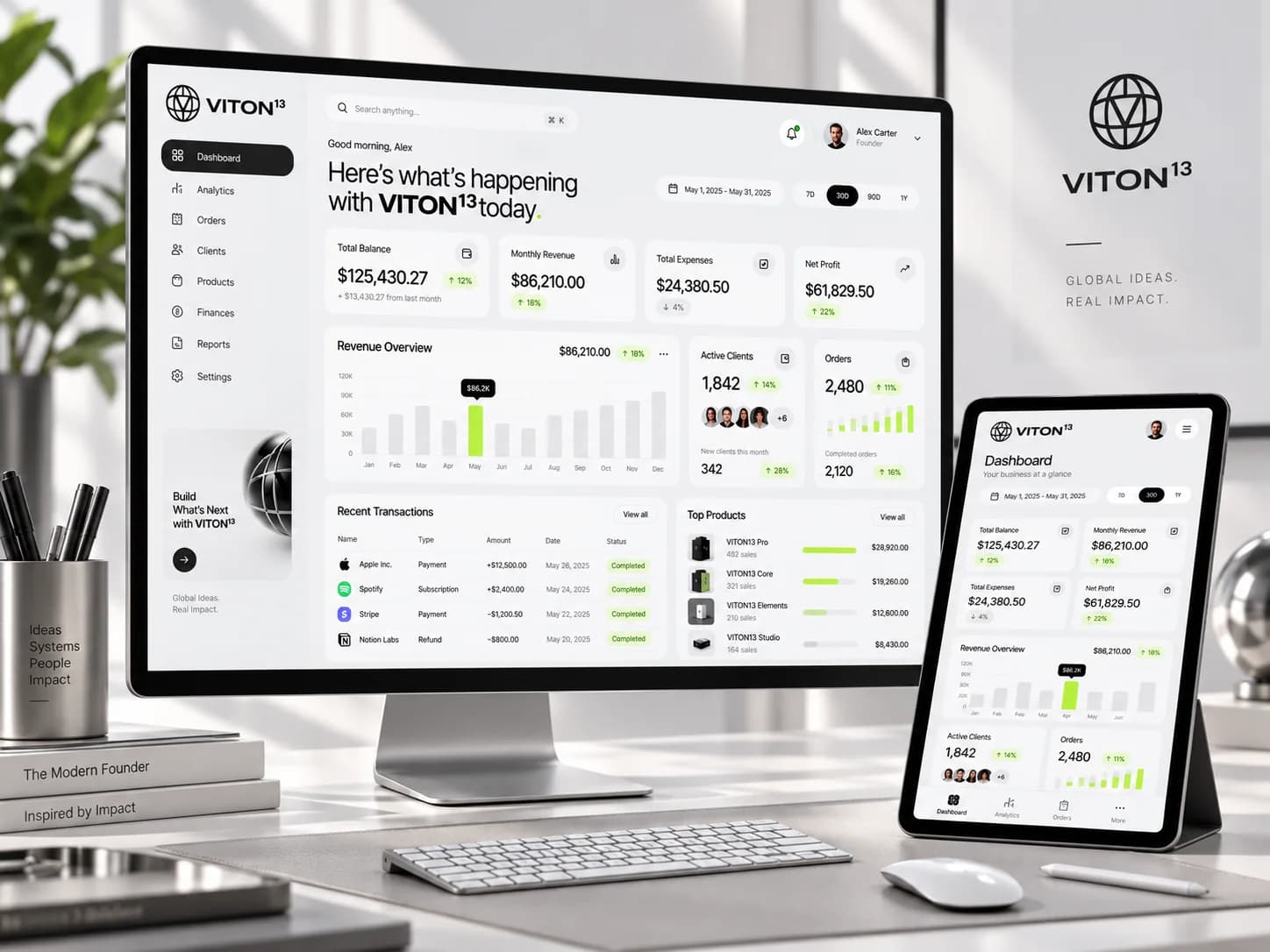
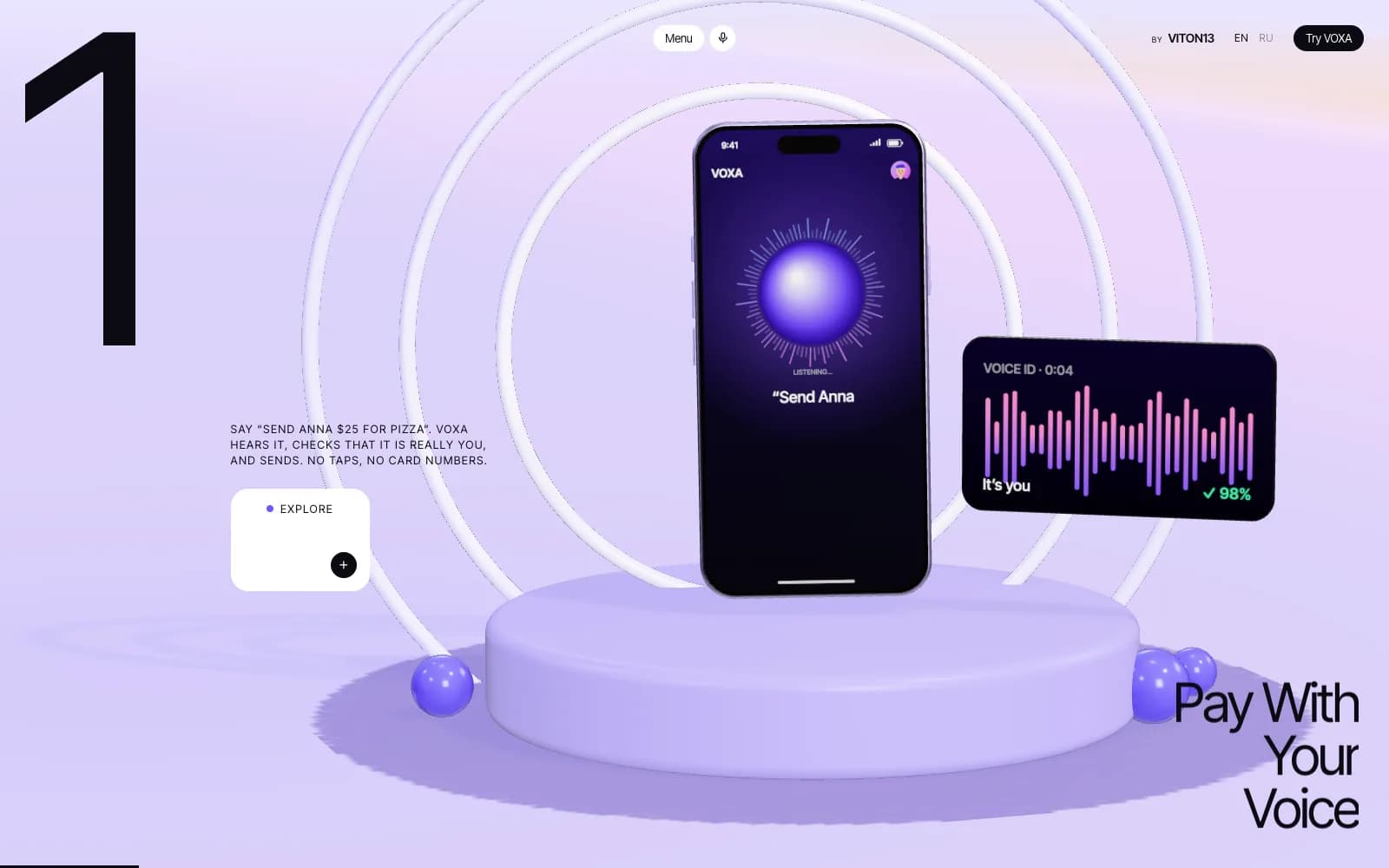
The showcase demonstrates the product surface we can engineer around verified business data. Authentication, permissions, APIs, automation and infrastructure are scoped against the real operation before implementation.
What we did
Modular front-end architecture · Responsive dashboard layouts · Role-ready interface states · Integration-ready data views
What this does not prove
Names, transactions and figures shown in this concept are illustrative.
VITON13’s own website: one Next.js application serves the main domain and six section subdomains in English, Russian, Spanish and French. Before a release goes live, a crawl checks its internal routes.
What we did
Built the company site in Next.js 16: four languages on seven hosts, a sitemap per host, hreflang between editions and a crawl of internal routes before each release.
What this does not prove
Shows how the site is built and released; speed was not measured, and no traffic, ranking or sales result is claimed.
Our city-mystery prototype turns a 3D city into a case to solve: read the newspaper, compare evidence, talk to people and make decisions through an in-game phone.
What we did
The city is rendered with three.js; the interface, story definitions and save system use JavaScript modules. We connect the current objective, the evidence collection and the phone to the same story state. Typographic newspapers and receipts make a document part of the investigation rather than an unreadable decoration.
What this does not prove
The project is a playable prototype with fictional people, documents and money. Catalogue prices demonstrate the interface; there is no real payment integration. The two-hour setting is a design target and session timer. This capture session does not establish completion time, full campaign coverage, player demand or sales.
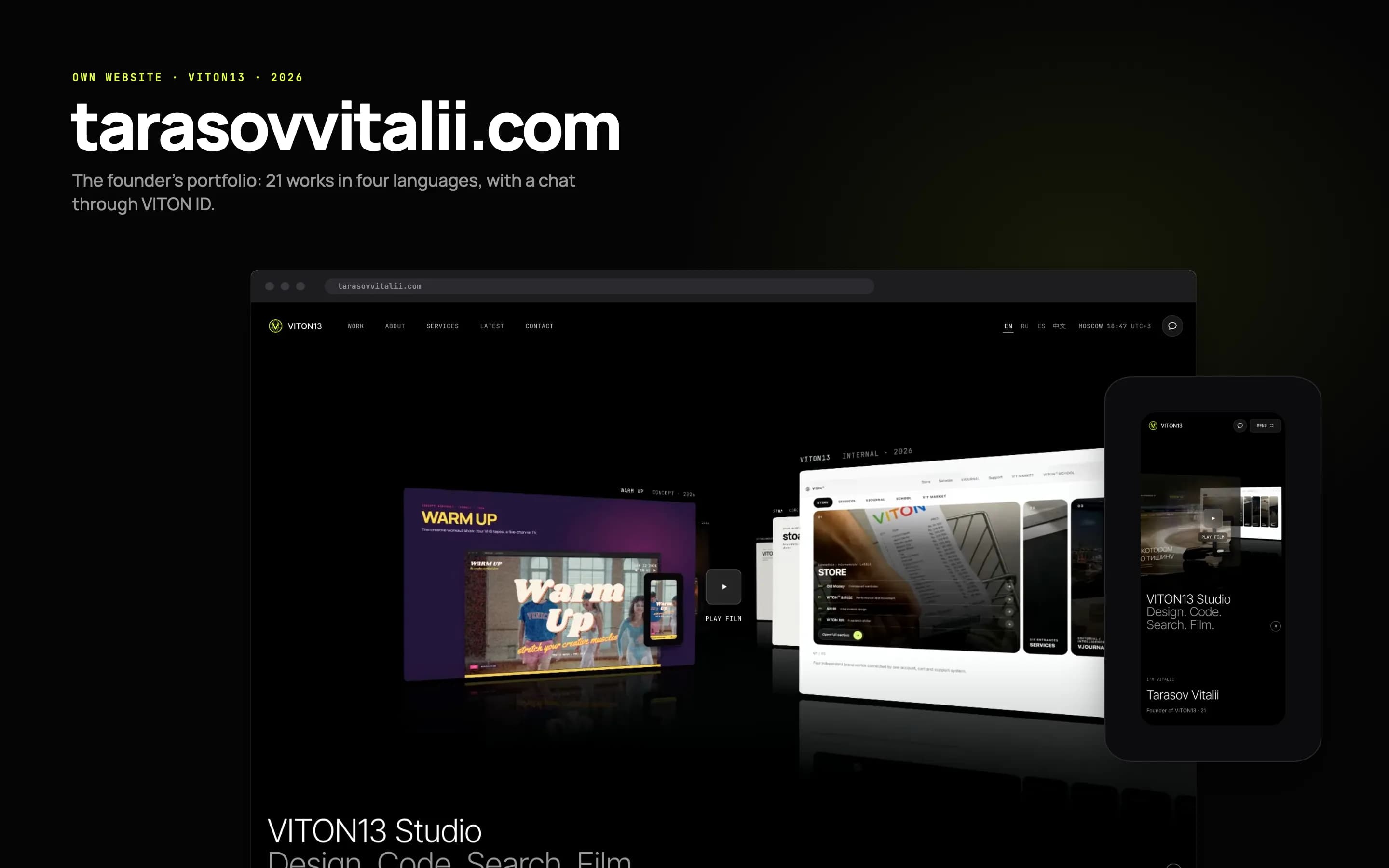
The personal website of Vitalii Tarasov, the founder of VITON13, designed and built by the studio and live since 23 September 2026. It shows 21 works, each labelled client, own product or concept, in English, Russian, Spanish and Chinese, lets visitors write to him through VITON ID and opens on a showreel drawn frame by frame in code, 47.6 seconds in full.
What we did
Designed and built the founder’s portfolio: four language editions, 21 labelled works with case pages, a VITON ID chat, a showreel rendered in code and deployment on our own server with HTTPS.
What this does not prove
Our own site, live since 23 September 2026: no traffic, ranking or enquiry data yet; Lighthouse scores are lab tests of the home page.
What is included, what we need from you, and the limits
What we deliver
Launch-ready websitesPremium landing pages, corporate sites, service hubs, and multilingual structures that feel stable on every screen.
Product interfacesFront-end code, account pages, user flows and dashboards that turn approved designs into a working product.
Technical cleanupPerformance tuning, responsive refinement, SEO foundations, and route architecture for public discovery.
What we need from you
The goal, the deadline and who will use the result
The current site, design or examples, if they exist
Access to hosting, domain or accounts when the task needs it
Texts and translations for a new website
Limits
A small task’s price is not the price of a whole website: the final price is fixed in writing after the scope review.
External costs — third-party services, licences, paid APIs — are not part of the price.
Work starts only after the scope, timeline and price are confirmed.
Options
How much does Website development on Next.js — launch, fix or product build cost, and what is included?
Site Fix Pack (up to five agreed fixes) starts at USD 33 with AI-assisted production or USD 53 with a human-led route; typical delivery is 1–2 working days.
The published scope includes launch-ready websites, product interfaces, technical cleanup.
Includes 1 revision round on the fixes; VITON13 confirms the scope in writing.
Site Fix Pack
Up to five defined fixes on a site that is already live.
Prices in USD; other currencies are approximate. Scope, revisions and dates are written into your estimate.
VITON13 PrivatePilot
One lead specialist for the whole project
One lead specialist plans and runs your project across brand, website, marketing, video, styling or marketplaces: human-led, with priority in the studio's schedule.
from $1,313, human-led only · kick-off within 2 working days of the signed scope; dates set in the written plan
We isolate the scope, route map, stack, and deployment needs before production begins.
02
Build
The interface, data layer, and logic are assembled into a responsive working system.
03
Hardening
We review mobile comfort, stability, performance, and the obvious breakpoints.
04
Launch
The project is deployed, checked, and prepared for ongoing iteration if needed.
Questions
Frequently asked
How much does a website cost and how long does it take?
A launch-ready site (Launch Site) starts at $113 AI-assisted or $173 human-led and takes 3–5 working days. A product build starts at $213 AI-assisted or $313 human-led and usually runs 10–15 working days; its final estimate follows the brief: user roles, integrations and platforms. Priority scheduling and the exact scope are confirmed in writing after the brief.
Can you fix my existing site instead of rebuilding it?
Yes. One defined bug fix starts at $13 AI-assisted or $33 human-led. The Site Fix Pack covers up to five agreed fixes for $33 AI-assisted or $53 human-led in 1–2 working days, checked on mobile and desktop, with a before/after list at handover.
What do I need to provide?
Texts, images and translations for the pages, plus access to the domain and hosting if the site is already live. If the content is not ready, our design and marketing teams can prepare it.
Do you also handle deployment?
Yes. Server setup, domain routing, SSL and the final launch checks are part of the Launch Site package, and the code and the access stay with you.
Can you work from an existing design?
Yes. We build from your Figma files or design system, or have our designers design the pages first, so the layouts and the code come from one team.
How do I order?
Send a brief from this page or open a VITON ID request with the goal, the deadline and links to what exists today. We reply within one working day with the scope, the timeline and the final price in writing.
Explore the scope and starting cost, then talk directly with VITON13. Your selected service stays with the conversation. Written estimate within 1 working day.
Let’s make it yours.
Explore our work or bring your own idea. It starts with a conversation.
Website development on Next.js — launch, fix or product build
Starting budgetFrom $33
Up to five defined fixes on a site that is already live.
Inside this scope
Up to 5 agreed fixes
Mobile and desktop check
Before/after list on handover
Timeline: 1–2 working days
Revisions: 1 round
Not included: new pages, redesign, migrations
Included: only the deliverables listed in the agreed package
Input required: brief, current materials and any access needed for this scope
A starting estimate for the selected scope. We confirm deliverables, timing and the final price in writing before work starts. External costs are separate.
What you can count on
Written estimate within 1 working day, sent to the contact you choose.
Scope in writing before work starts: deliverables, revision rounds and what is not included.
We work in four languages and show prices in your currency.
No account needed. Attachments are encrypted in this browser before upload.
Send a detailed brief or attachments
Development from $13
AI reduces repetitive production time. VITON13 passes that efficiency back to the client while human review remains part of every delivery.
10 working categories, 111 capabilities and 41 complete service routes. Search by the result or technology you need; smaller tasks can be scoped directly from their category.
111 matching capabilities
01
Discovery & architecture
Technical decisions, audits and migration plans made before implementation cost becomes difficult to reverse.
Short answers from VJOURNAL. Each one opens into a full article with sources.
What is a landing page
A landing page is a standalone page made for one campaign and one action. Visitors arrive from an ad, an email or a search result and see one offer and one button, without the menu of a full website. It suits one product, one offer or a test of demand; a business with many services or many search queries needs a website as well.
Decide first what the site is for and which single action it should produce. Then choose the kind of contractor, send the same one-page brief to several of them and compare written estimates. Sign a contract that names the stages, the revisions and who holds the rights to the design and the code, keep the domain and the hosting in your own name, accept the work against the brief and agree on support for the first month.
An owner can build a first business site alone in eight steps: name the one action a visitor should take, register the domain in your own name, choose a builder or WordPress, plan a few pages, write the texts and take the photographs, test everything on a phone, fill in titles and descriptions, and add the site to Search Console and Yandex Webmaster. Order a site when your time or the integrations cost more than the work.
A mobile app is a program built to run on a phone or tablet and usually installed from a store such as App Store, Google Play or, in Russia, RuStore. It can be native, cross-platform, a web app or a PWA. Store apps pass a review and need updates; a site or PWA is often enough when customers come rarely.
Website fixes are a defined list of changes to a site that already works: repaired errors, faster pages, a better phone version, new blocks and integrations. They differ from a redesign, which reworks the whole site, and from support, which runs month after month. Describe each problem with steps to repeat it, make a backup first and redirect every address you change.
Start with a product, a buyer and the arithmetic of one order, including shipping and returns. Then choose a hosted platform, open-source software or a custom build, check which payment providers and tax rules apply in your country, write honest product pages and terms for the markets you serve, test the checkout, and bring the first buyers from marketplaces, Google’s free listings and social posts.
How Website development on Next.js — launch, fix or product build works, what is included and how to prepare
Website development on Next.js — launch, fix or product build is most useful when it is treated as a working system rather than an isolated deliverable. The goal is to connect sites, apps, flows with a visible business outcome, a controlled process and files or tools that remain usable after launch.
01
The business problem behind the service
VITON13 builds and launches websites, web applications and connected digital products for businesses. Choose a direction across commerce systems, automation, integrations, backend and technical support.
A request often arrives as a solution — “make a site”, “automate the workflow”, “redesign the brand”. We begin one level earlier: what must become faster, clearer, safer or easier to buy? That decision protects the project from producing polished work that cannot change the operation.
02
What is included
The exact scope depends on the brief, but the working structure below shows the parts we normally connect into one delivery line.
01
Launch-ready websites
Premium landing pages, corporate sites, service hubs, and multilingual structures that feel stable on every screen.
02
Product interfaces
Front-end code, account pages, user flows and dashboards that turn approved designs into a working product.
03
Technical cleanup
Performance tuning, responsive refinement, SEO foundations, and route architecture for public discovery.
03
How the project moves
Every stage has an observable output. Feedback is tied to the commercial or operational objective, so approval does not depend on taste alone.
01
Architecture
We isolate the scope, route map, stack, and deployment needs before production begins.
02
Build
The interface, data layer, and logic are assembled into a responsive working system.
03
Hardening
We review mobile comfort, stability, performance, and the obvious breakpoints.
04
Launch
The project is deployed, checked, and prepared for ongoing iteration if needed.
04
Who this service is for
The strongest fit is a team with a real decision, a responsible owner and access to the inputs required to validate the work.
Companies that need a website launched on time
A responsive Next.js site (Launch Site) with core data wiring and deployment in 3–5 working days, or two working days on the Express slot. You supply the content; we handle the build, the server and the domain.
Founders who need a cabinet, dashboard or service flow
Feature delivery with states, routes, testing and hardening in 10–15 working days, followed by monthly support from $73 AI-assisted or $93 human-led per month for fixes and growth work.
05
Scope and starting price
Published prices are starting points. The final scope depends on volume, integrations, research depth, number of decision-makers and the level of launch support.
Site Fix Pack
Up to five defined fixes on a site that is already live.
$33AI-assisted$53Human-led
Launch Site
A production-ready website with responsive polish, clear sections, and deploy support.
$113AI-assisted$173Human-led
Product Build
A larger build for dashboards, client accounts, content tools or service flows.
$213AI-assisted$313Human-led
Ongoing Dev Support
A monthly technical retainer for ongoing fixes, improvements and new features.
Custom quoteper agreed scope
06
What to prepare before the brief
The business result that should change
Current files, systems, constraints and examples
One person responsible for decisions
A realistic launch window and approval rhythm
Website development on Next.js — launch, fix or product buildfrom $33